Which Employers Must Follow DOT Drug Testing Rules
DOT drug testing regulations apply to any employer with workers in safety-sensitive positions regulated by the DOT's six operating agencies: FMCSA (motor carriers), FAA (aviation), FRA (railroad), FTA (mass transit), PHMSA (pipeline), and USCG (maritime).
If you operate commercial motor vehicles with a GVWR over 26,001 pounds, carry 16 or more passengers for compensation, or transport certain hazardous materials requiring a placard, your drivers are subject to FMCSA Part 382 — the backbone of DOT drug and alcohol testing requirements.
The Five Required Types of DOT Drug Tests
Pre-employment testing is mandatory before any safety-sensitive employee begins performing regulated duties. Random testing draws from a pool of all safety-sensitive employees at federally mandated minimum rates — currently 50% for drugs and 10% for alcohol under FMCSA.
Post-accident testing is triggered when a fatal accident occurs or a citation is issued following an injury accident. Reasonable suspicion testing is conducted when a trained supervisor directly observes behavior consistent with drug or alcohol influence. Return-to-duty testing applies to employees who violated the program and completed SAP evaluation.
What Substances DOT Tests Screen For
DOT urine drug panels screen for five substance categories: marijuana metabolites (THC-COOH), cocaine metabolites, amphetamines (including methamphetamine and MDMA), opioids (codeine, morphine, hydrocodone, hydromorphone, oxycodone, and oxymorphone), and phencyclidine (PCP).
Alcohol testing is entirely separate from urine drug testing and uses evidential breath testing (EBT) devices or saliva-based screening devices. A breath alcohol concentration (BAC) of 0.04 or above is an automatic violation; a BAC between 0.02 and 0.039 temporarily removes the employee from safety-sensitive duties.
Chain of Custody and the MRO Process
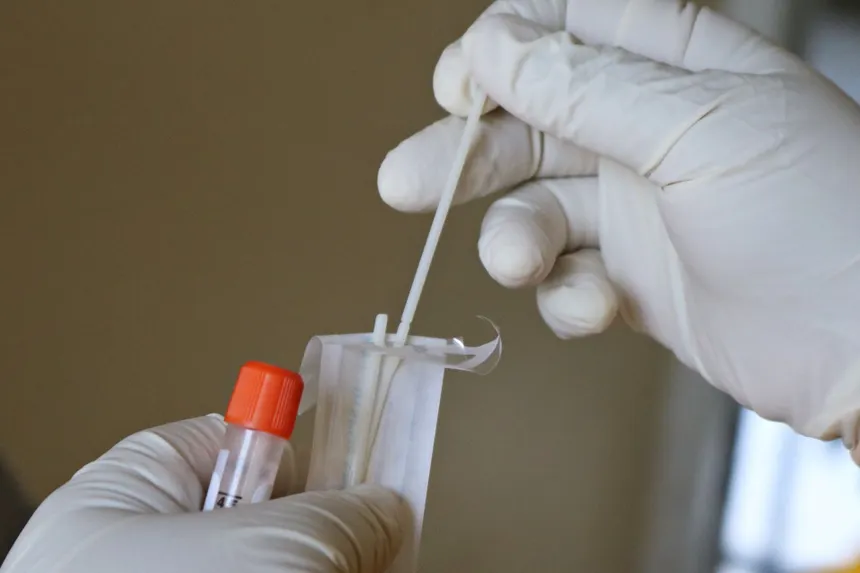
Every DOT urine collection must use a federal five-part Custody and Control Form (CCF). The collection process follows strict 49 CFR Part 40 procedures — from donor identity verification through split specimen preparation and sealing. Any procedural error can invalidate the test.
Non-negative laboratory results go directly to a federally certified Medical Review Officer (MRO) before reaching the employer. The MRO contacts the donor to verify whether a legitimate medical explanation exists — such as a valid prescription — and reports only verified results to the Designated Employer Representative (DER).
The Substance Abuse Professional (SAP) Referral Process
When an employee has a DOT violation — verified positive, adulterated, substituted, or refusal to test — they are immediately removed from all safety-sensitive functions. The employer must refer them to a qualified Substance Abuse Professional (SAP) for evaluation and treatment or education recommendations.
The SAP determines what steps the employee must complete before a return-to-duty test. After a verified negative return-to-duty result, the employee must complete a follow-up testing plan of at least six unannounced tests over the following 12 months. 1 Stikk Mobile offers SAP Assessment services as part of our employer compliance programs.